
va-Q-tec Reduces Energy Consumption of Vending Machines with Vacuum Insulation
- Vacuum Insulation Panels (VIPs) reduce energy consumption by up to 45 percent
- Lower operating costs with increased usable internal volume
- Supports compliance with new EU efficiency requirements
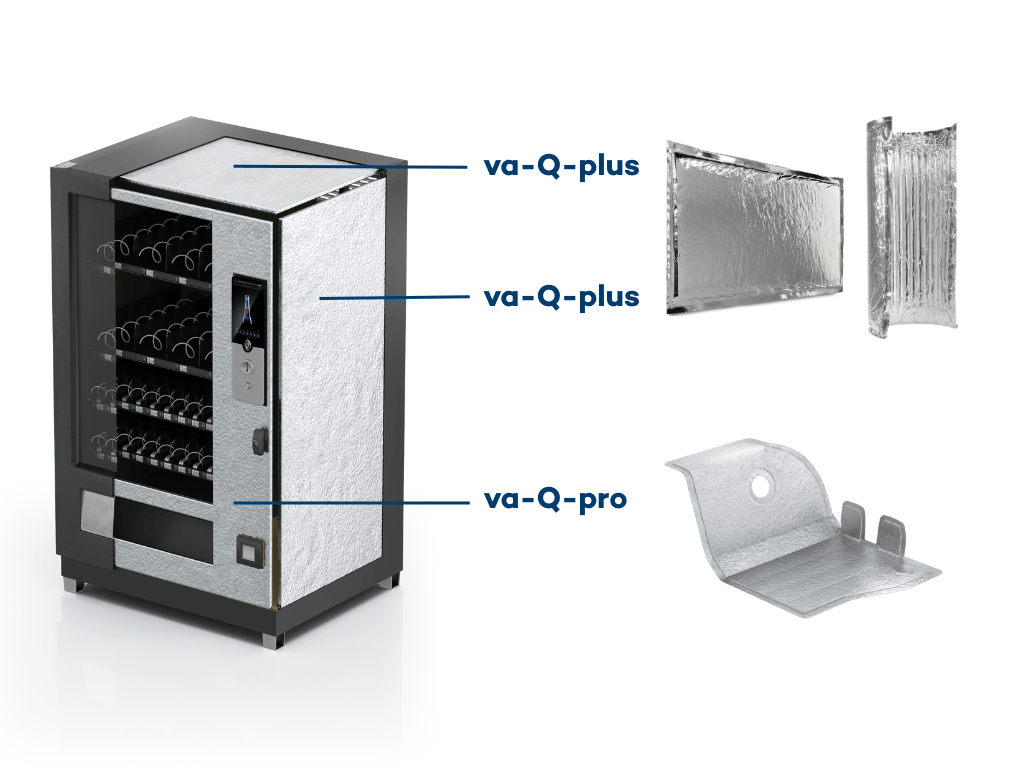
Würzburg, February 3, 2026. Vending machines operate continuously and are often exposed to demanding conditions such as direct sunlight, high humidity, or limited available space. At the same time, they must deliver consistent cooling performance to ensure the ongoing quality of the products. va-Q-tec now offers its high-performance insulation based on Vacuum Insulation Panels (VIPs) for use in vending machines. The ultra-thin VIPs significantly reduce cooling losses and enable compact designs with lower power consumption. Ice cream, ready-made and frozen meals, or beverages can therefore be cooled reliably and cost-effectively even under extreme conditions, ensuring product quality at all times.
“In the vending sector, high energy demand and limited installation space directly collide. The innovation of highly insulating Vacuum Insulation Panels helps to ease this trade-off. Operators benefit from lower energy costs and increased sustainability”, says Bastian Herbert, Market Director Appliances at va-Q-tec.
Lower Energy Demand and Reduced Operating Costs
The use of vacuum insulation panels enables energy savings of up to 45 percent. In addition to reduced energy consumption, vending machine operators and manufacturers benefit in several other ways. Thanks to lower heat ingress, compressors operate more efficiently, with fewer switching cycles and reduced mechanical stress. This minimizes wear and tear, extends service intervals, and sustainably lowers maintenance costs.
Focus on Efficiency and Sustainability
The VIP solutions of va-Q-tec can be integrated into both new developments and existing vending machine systems. Designed for long-term use, they help companies meet both economic and regulatory requirements. In line with increasingly stricter EU efficiency directives, they contribute to a reduced carbon footprint in vending operations.